

What Does Neuroscience Have to Do with Coaching? Why Do College Students & Recent Grads Need One?

Updated: Nov 28, 2025

Short answer: it provides a unique lens to understand human behavior.
As brain-based coaches, our job is to facilitate change in your:
Thinking (beliefs and attitudes)
Emotions (more mindfulness and resilience)
Behavior (new healthy habits)
Coaching builds the mental skills needed for lasting change.
Skills such as:
Mindfulness
Self-awareness
Motivation
Resilience
Optimism
Critical thinking
Stress management
Brain-based coaching is emerging as a powerful intervention. It helps people initiate and maintain sustainable change.
How Can Neuroscience More Deeply Inform Coaching?
The cornerstone of neuroscience teaching is the seminal text Principles of Neural Science, authored by Eric Kandel, James Schwartz, and Thomas Jessell. Kandel won the 2000 Nobel Prize for his pioneering work on memory storage in neurons.
Before his Nobel accolade, Kandel penned an influential paper, A New Intellectual Framework for Psychiatry. In this work, he envisioned how insights from neuroscience could revolutionize our understanding of mental health and well-being.
Inspired by Kandel’s groundbreaking ideas, a team from the Yale School of Medicine proposed seven principles of brain-based therapy. These principles aren’t just for psychiatrists and therapists; they’ve made their way into the toolkits of health professionals, business leaders, and life coaches. They offer practical applications far beyond their initial scope.
These principles highlight the profound impact of human interactions and experiences on brain function and behavior change.
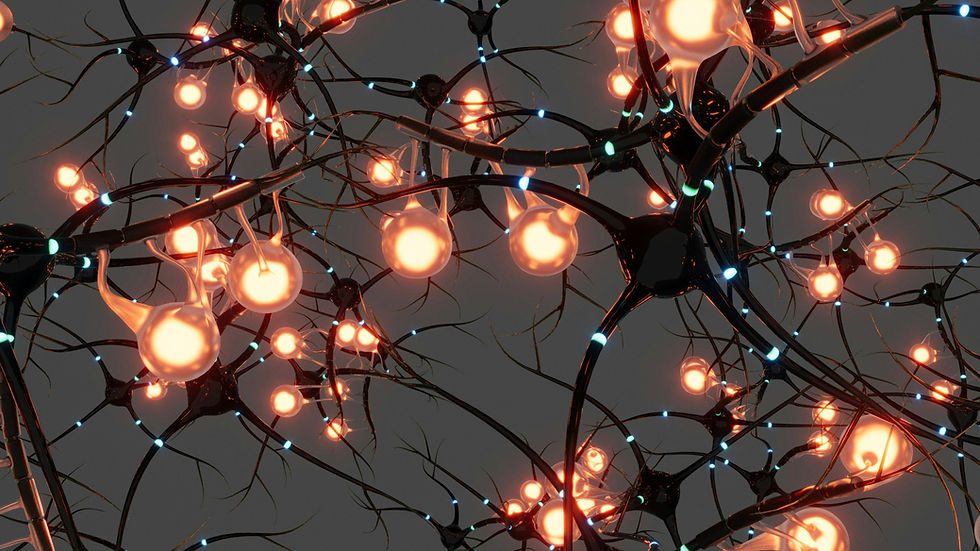
The idea that the brain can change in response to experience, known as neuroplasticity, is a well-established concept in contemporary neuroscience. Research shows our brains can adapt remarkably at any age.
Here’s a summary of Kandel, Cappas, and colleagues' thoughts on applying neuroscience to therapy and coaching.
The 7 Principles of Neuroscience Every Brain-Based Coach Knows—and You Can Too
1. Both Nature and Nurture Win
Both genetics and the environment shape our brains and influence behavior. Nature and nurture aren’t adversaries; they’re collaborators, intricately intertwined. It’s not an either/or scenario; it’s a resounding both.
Our brains bear the imprints of genes, hormones, and neural activity, which constitute the ‘nature’ component. Simultaneously, childhood experiences, social bonds, education, culture, and the world around us form the ‘nurture’ component.
Both nature and nurture can forge and modify brain structures and, consequently, human behavior. Coaching can be a strategic ‘environmental tool’ to facilitate change and shape neural pathways.
2. Experiences Transform the Brain
Our brain circuits remain responsive to experiences throughout our lives—not just during development or learning.
Neuroplasticity is a lifelong process. Regions of our brain linked to emotions and memories, like the prefrontal cortex, amygdala, and hippocampus, exhibit remarkable plasticity.

3. Memories Are Imperfect
Let’s uncover a truth: your memories aren’t pristine records. They’re remolded as recalled, depending on the context. As we age, we intertwine narratives with our memories.
Our well-being, personality, and emotions are tied to memory. The conscious recollection of personal past events, known as autobiographical memory, helps us craft our stories.
With life experience, we weave narratives into our memories. These autobiographical memories are constantly revised because our sense of self is, too.
Whether we realize it or not, we use imagination to reinvent our past and, with it, our present and future.
4. Emotion Underlies Memory Formation
Memories and emotions are interconnected neural processes. Neuroscientist Lisa Feldman Barrett succinctly puts it: “An emotion is your brain’s creation of what your bodily sensations mean in relation to what is going on around you.”
Emotions and memory are pivotal in therapy, education, and coaching. Understanding how they influence behavior can enhance your practice.
Research suggests each of us constructs emotions from various sources: our physiological state, reactions to the environment, experiences, and culture.

5. Relationships Are the Foundation for Change
Relationships in childhood and adulthood can elicit positive change. Sometimes, it takes the love or attention of just one person to help another change for the better.
The therapeutic relationship can help clients modify neural systems and enhance emotional regulation.
6. Imagining and Doing Are Pretty Much the Same Thing to the Brain
Here’s a fascinating revelation: when you imagine something, your brain activates the same neural pathways as when you actually experience it!
Mental imagery or visualization activates the same brain regions as actual behavior and can speed up learning a new skill. Envisioning a different life may invoke change just as effectively as the actual experience. Even in medicine, guided imagery can alleviate chronic pain from conditions like cancer and spinal cord injuries.
For our clients, mentally rehearsing aspects of a desired goal can engage the same brain networks as the actual experience.
7. We Don’t Always Know What Our Brain Is ‘Thinking’
More often than not, we remain unaware of our brain’s inner workings. Unconscious processes sway our thoughts, emotions, and behaviors. Our brain processes nonverbal and unconscious information, monitoring hydration levels, hormones, body temperature, and more.
Unconscious information processing can shape our thoughts and feelings.
It’s entirely feasible to react emotionally to something without consciously understanding why.
Sometimes, you may feel emotionally stirred by something you hear, even though no harm was intended. This stems from your emotional memory, triggered automatically.
The good news? You can rewire this emotional memory. You can also learn to intercept your thoughts when your mood dips and assess their accuracy in the moment.
In essence, we can learn to ‘think about thinking.’
The Role of Coaching in Your Life
Coaching is not just about addressing problems; it’s about actively rewiring your brain. Each new habit, mindset shift, and moment of resilience strengthens the neural pathways that make change stick.
Coaching uses the science of mindfulness, motivation, optimism, and self-awareness to help you move from where you are to where you want to be. The research is clear: experiences, relationships, and even imagination can reshape the brain.
So why not put that science to work for you? With the right coach by your side, you can train your brain to think differently, feel stronger, and take action with confidence—creating lasting change that builds the future you want.


Comments